
Something Is Living in Your Chimney: Houston's Birds, Bats, and Squirrels
August 23, 2026 · Houston Air Pure Team
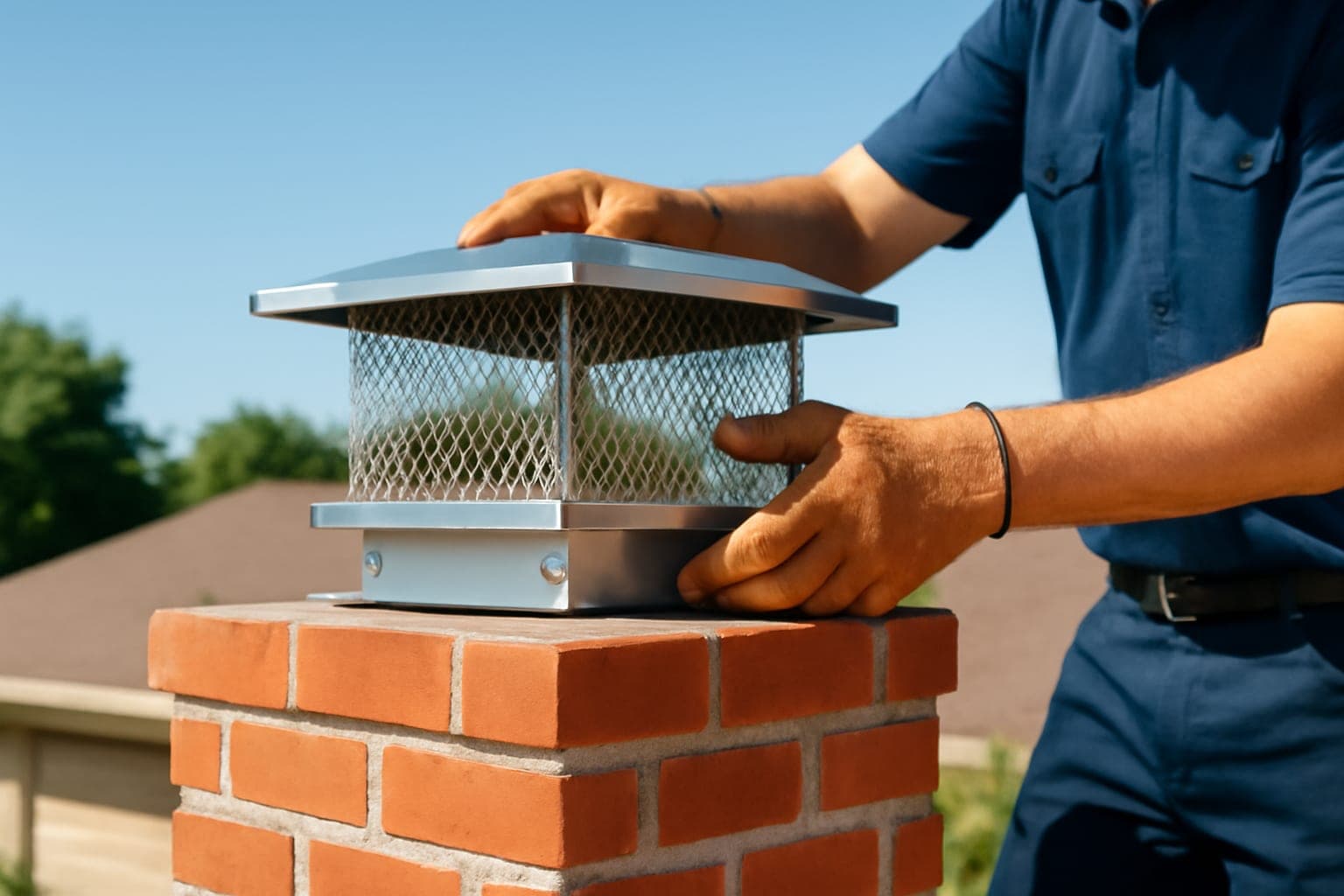
An uncapped chimney is, from an animal's point of view, an outstanding piece of real estate: a dry vertical shaft with rough walls, no predators, and a warm house at the bottom. Houston has a long nesting season and a lot of uncapped flues, and the combination keeps us busy.
Before anything else: do not light a fire to drive an animal out. It is cruel, it frequently fails, and a panicked animal that dies inside the flue turns a noise problem into a months-long odor problem. Also do not spray anything down the chimney. Both of these come up on almost every call.
Chimney Swifts — The One With Legal Protection
If you hear a chattering, mechanical, rolling twitter from the chimney between roughly March and October, you almost certainly have chimney swifts. They are small dark birds that cannot perch like other birds — they cling to vertical surfaces, which is exactly why a masonry flue suits them. Houston sits on their migration route and they nest here in numbers.
Here is the part that surprises homeowners: chimney swifts are protected under the federal Migratory Bird Treaty Act. Removing an active nest with eggs or chicks is not a decision a homeowner or a chimney company gets to make. The lawful and standard approach is to wait until the young have fledged and the birds have left — typically a matter of weeks — and then clean the flue and cap it so next season's pair goes elsewhere.
The noise is loudest for the week or two when the chicks are begging. It ends. We know that is not the answer anyone wants in the moment, and it is the correct one. If you believe a nest has fallen or a bird is trapped below the damper, that is a different situation — call a licensed wildlife rehabilitator.
Squirrels, Raccoons, and Bats
Squirrels are the ones that fall in and cannot get out. Smooth metal flue liners give them nothing to climb, and you get frantic scratching and scrabbling, usually during the day. A squirrel that has been in there more than a day or two is dehydrated and will not last. This is a same-week problem.
Raccoons are the opposite — deliberate residents. A female raccoon will choose a smoke chamber as a den site and raise a litter there, and the sounds are heavier: thumping, chittering, movement at dusk and dawn. Raccoons can and do get through a damper into a house. They also carry disease and they are strong. Do not open the damper to look.
Bats are protected in various ways and are best handled by a specialist, particularly during the maternity season when eviction can strand pups. Bat guano accumulating in a chimney is a genuine health matter and needs proper handling, not a shop vacuum.
For any live animal, the sequence is: wildlife removal professional first, chimney company second. We are not a wildlife service and we will tell you so on the phone. What we do is the part that comes after — clearing the nest material and droppings out of the flue, checking for damage to the liner and damper, and closing the entry point for good.
What They Leave Behind Is the Real Problem
The animal leaves. The nest does not. A season's worth of twigs and dried grass packed into a smoke chamber is a fire hazard sitting directly above a firebox, and it is also a blockage — one that pushes combustion gases back into the room the first cold night you decide to use the fireplace. Every year in Houston somebody lights their first fire of the season into a flue full of last spring's nest.
Droppings are the other half. Accumulated bird and bat droppings in an enclosed, humid Houston chimney are a biological contamination issue, not a housekeeping one. They also feed odor: the wet-animal smell that gets stronger on humid days and drifts into the living room every time the house is depressurized by a running dryer or a range hood.
That draft direction matters for a second reason. A blocked or contaminated chimney can send odors into your HVAC return if the two are anywhere near each other, which is how a chimney problem shows up as a whole-house smell. If your house smells musty everywhere rather than just near the hearth, the ductwork is worth looking at too — see air duct cleaning and our piece on what Houston humidity does inside ductwork.
Cap It and Be Done
The permanent fix is a stainless steel cap with a spark screen, sized and secured properly. Not the galvanized one that rusted off, and not a piece of hardware cloth wired over the top — Houston wind and salt-tinged humidity eat both. A quality cap keeps out rain, animals, and leaves, and it is one of the cheapest pieces of hardware on your house relative to what it prevents.
Timing: cap after the flue has been cleared, and for swifts, after they have migrated out for the season. Capping a chimney with animals inside it is the one thing worse than doing nothing.
We clean and cap across Houston and the surrounding metro — Katy, Cypress, Spring, Humble, The Woodlands, Richmond, Pearland and more. Call and describe the sound and the time of day you hear it; that alone usually tells us which animal you have.