
Mold in Your Air Ducts? What Houston's Humidity Is Really Doing to Your HVAC
June 29, 2026 · Houston Air Pure Team
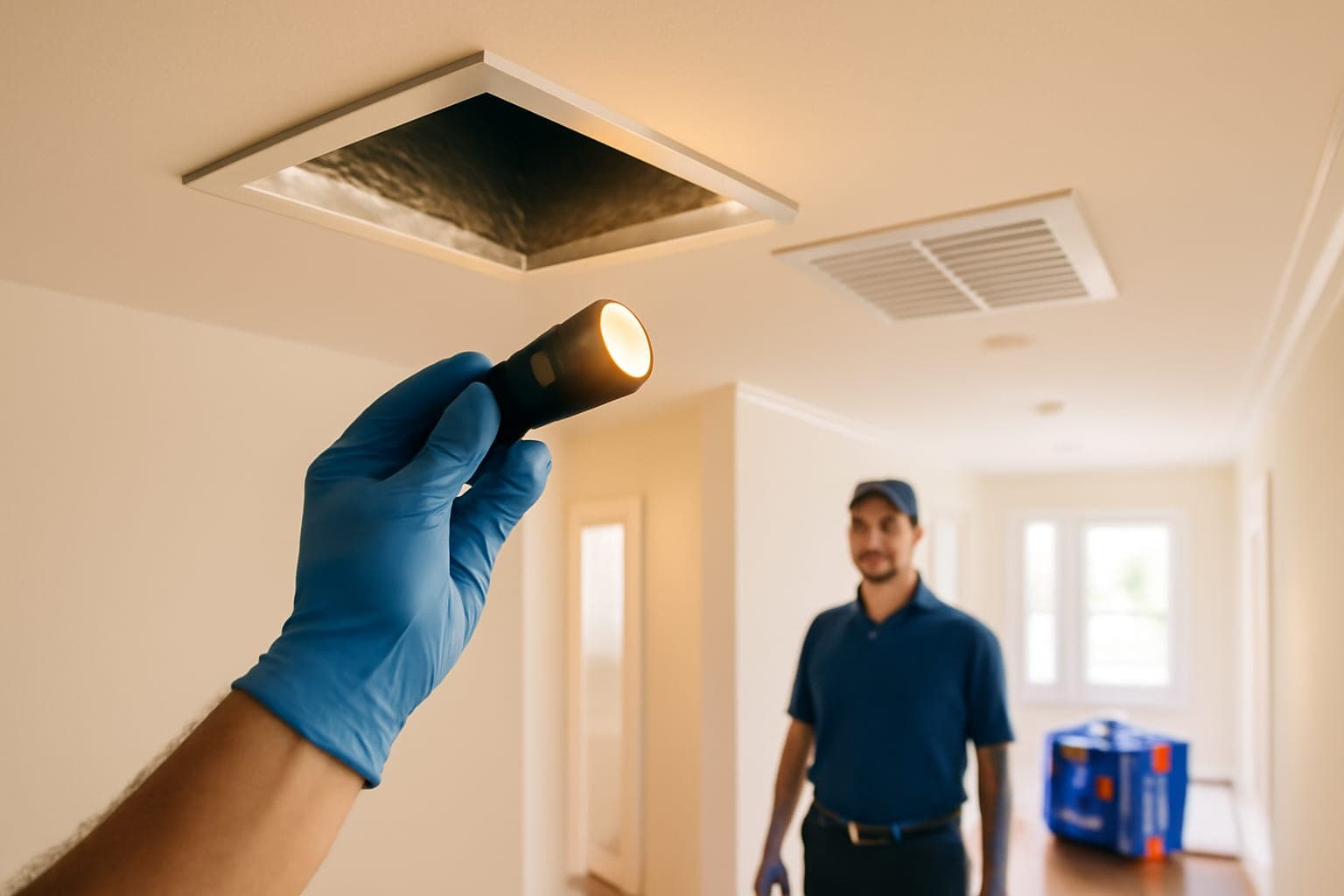
Walk into a Houston house that's been closed up all day in August, and the first breath tells you a lot. If that breath smells like a wet towel that never dried, the odds are good something is growing inside the HVAC system — and the ducts are usually where it starts.
We do air duct mold removal in Houston every week, and most of it follows the same script: same smell, same causes, same fix. Here's the whole picture, including the parts that don't involve hiring anyone.
Why Houston Ducts Grow Mold When Other Cities' Don't
Mold needs three things: spores (always present, everywhere), food (dust — also always present), and moisture. In most climates the moisture part is the bottleneck. In Houston, it isn't.
Your AC works by pulling humid air across a cold coil, and that coil regularly sits at 40-something degrees while the attic around it sits at 130. Everything near that temperature gap sweats. The supply plenum — the box that feeds cooled air into your ducts — runs cold and damp all summer long. Dust settles on its walls, humidity keeps that dust damp, and you've built a petri dish that runs 9 months a year.
Flex duct with crushed sections, duct board (common in Houston homes from the '70s through the '90s), and any spot where an attic duct sags and traps condensation are the other usual suspects. Duct board is the worst offender: it's basically compressed fiberglass with a paper-like facing, and once mold gets into it, you often can't clean it — you replace it.
Musty Smell vs. Actual Mold: How to Tell
Not every AC smell is mold. A quick field guide from a few thousand service calls:
A dirty-sock smell that appears in the first minute of cooling and fades — usually the evaporator coil, not the ducts. Bacteria on the coil, fixable with a coil cleaning. A stale, dusty smell that's constant — plain dust load, ducts due for cleaning but probably not moldy. A wet, earthy, basement-type smell that gets stronger the longer the system runs — that's the one that's usually mold in the ductwork or plenum.
You can do one check yourself before calling anyone: pull a supply register (two screws), and look at the first few feet of duct with a flashlight. Dark speckling or blotches on the duct's inner surface — especially anything that smears greenish-black when swabbed — is worth a professional look. Uniform gray fuzz is just dust.
What Legitimate Mold Removal Involves (and What's Theater)
A real air duct mold removal job in Houston looks like this: camera inspection to map where growth actually is, negative-pressure containment so dislodged spores go into HEPA filtration instead of your bedrooms, physical agitation and removal of the growth — mold has to be physically removed, not just sprayed — and then an EPA-registered antimicrobial applied to the cleaned surfaces. If duct board is colonized, the honest answer is replacement of those sections, and a good company says so.
What's theater: 'fogging' the system with a sanitizer without cleaning anything first. Spraying biocide over a layer of moldy dust kills some of the surface growth and leaves the dead material — still allergenic — plus the food source for the next colony. If a company's mold treatment takes 30 minutes and never involves a vacuum, that's a fogger, not a remediation.
Keeping It From Coming Back
Removal without fixing moisture is a subscription, not a cure. The three changes that matter most in Houston homes: keep indoor humidity under about 55% (a standalone dehumidifier or a whole-home unit if your AC short-cycles), fix duct insulation gaps that create sweating spots, and make sure your condensate drain line isn't backing up into the plenum — pour a cup of vinegar down the drain line access every couple of months.
If the smell in your house matches what you read here, we'll put a camera in your ducts and tell you what's actually growing — and if it's just dust, we'll tell you that instead.